
From Idea to Reality: How Pablo Kaplan Brought The Product Blueprint Book to Life
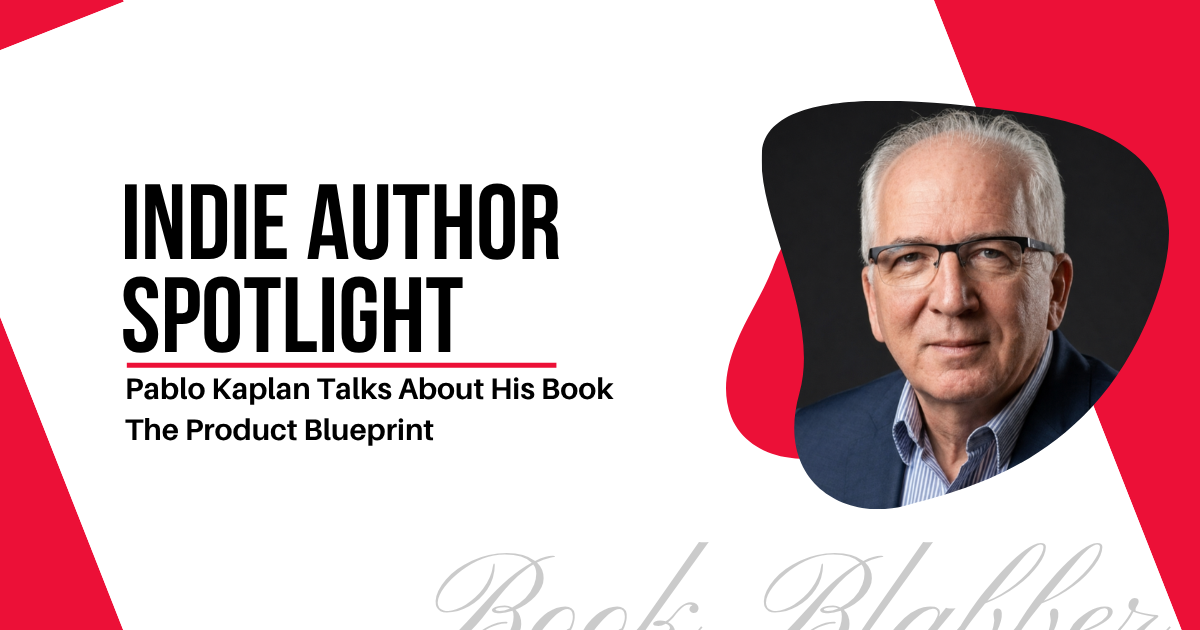
Every book has a story behind the story. Today, I’m sitting down with Pablo Kaplan, the mind behind The Product Blueprint. He has distilled over 40 years of experience into a comprehensive guide for the next generation of innovators.
This conversation explores Kaplan’s philosophy on product innovation and his thoughts on the future of product development in an age of rapid change. We also talk about the inspiration, the writing process, and the journey of bringing this book to life. From his biggest challenges to his proudest moments, this interview is packed with insights.
Let’s dive in!
1. Tell us a little about yourself.
I’m an economist and passionate about creativity and leading through educating the next generations. I live in Israel, I am a father and grandfather, and I live with my spouse, Chava, with whom I run Wheelchairs of Hope. This humanitarian initiative has been my greatest achievement. Together with my team, I developed an innovative wheelchair for children with disabilities. It’s designed to improve their self-esteem and encourage access to primary education while confined to their homes.
I’m also a businessperson with more than 40 years of international experience in innovation and product development, managing and integrating multinational teams. And I’m a visiting lecturer at two design universities in Israel. My recently published book, The Product Blueprint, aims to put my extensive experience in the hands of those involved in the amazing practice of innovation.
2. Awesome, pitch your book in one or two sentences.
From napkin sketch to market launch, The Product Blueprint is the book I wish I'd had at every stage of my career – and the one a product team needs on the table right now.
3. What kind of readers would love this book?
The primary audience for the book is students enrolled in programs in which product development, innovation management, and design thinking are core or adjacent subjects. Think of courses, such as Industrial Design, Design Management/Strategic Design, or Product Engineering. Students in MBA programs (with product strategy or innovation tracks) and entrepreneurship programs will also benefit from this.
Apart from them, The Product Blueprint book is suitable for early-career product professionals, senior product and innovation leaders, and entrepreneurs and startup founders
4. Now, let’s get a little personal. What’s the story behind this book?
I have been leading teams for the last 35 years and have always provided them with written protocols and guidelines to maintain a single language throughout product development. Apart from that, as mentioned, I teach at two universities on the art of product management. For those courses, I created a comprehensive academic syllabus. The book is the result of all the above processes of educating new generations of makers.
5. Any specific moment or a lesson from the book that’s close to your heart?
I love a few chapters of my book, especially “Why Product Fail?” It became a very much-requested conference topic. I also like the chapters about my experience with IKEA and about the Japanese company MUJI.
6. Would love to hear about your experience with IKEA and MUJI?
While working with Keter Plastic, I had the opportunity to work with IKEA for a few years of collaboration. I have found it to be the most innovative retailer, leading in product innovation in a wide range of products. It’s an immense source of inspiration for product managers. I’ve seen that at the heart of IKEA's success lies a design philosophy that prioritizes efficiency from the very conception of a product. Unlike traditional furniture manufacturers, who design first and consider production later, IKEA's approach integrates manufacturing and logistics constraints into the initial design process.
At MUJI, Japanese designers frequently choose materials that age gracefully rather than resist the passage of time. Wood that develops patina, metals that oxidize naturally, and fabrics that soften with use are preferred over synthetic materials that maintain an unchanging appearance. It acknowledges that objects are meant to be lived with and transformed through use. The furniture and product design of MUJI exemplify this principle. Minimalism in Japanese designs differs significantly from the sterile, technology-focused minimalism often seen elsewhere.
7. Thanks for sharing! Which part of The Product Blueprint book gave you the hardest time?
Probably the hardest issue during the book writing was how to keep the balance between my personal experiences and making it interesting and educational. I didn't want it to just be a book for people looking for motivational slogans. It’s for people who want to build something that actually works, and I wanted to make it easy to read, not “heavy.”
8. What’s one weird or unexpected thing you Googled while writing this book?
I looked into how unprepared industries were for crisis times (like COVID-19).
9. And what did you find? Were the industries actually unprepared?
I believe that most executives in different industries have realized that crises actually bring opportunities for innovation and paradigm shifts. A good example is the amazing adaptation of the Zoom app, which allowed millions of employees to work from home in no time. Still, the challenges faced by industries that need a workforce at production sites will incentivize them to introduce more automation and make production less dependent on the labor force.
As I believe that COVID was only a “wake-up call” for humanity, I trust that innovation will bring a lot of solutions and the world will be better prepared to face such a crisis.
10. Ohkay, while researching or writing, did you come across something that completely changed the way you think about the topic?
Yes, it’s the potential future impact of AI on the New Product Development thinking. I recognize that AI is changing how organizations approach product development and decision-making. Rather than treating AI as a futuristic concept, I position it as a practical tool that can accelerate processes and improve execution. The message is clear: innovation leaders must adapt or risk becoming irrelevant.
11. If a reader could take away just one idea or insight from this book, what would you want it to be?
I wish they feel refreshed after reading and are passionate about innovation. Ultimately, The Product Blueprint shall succeed because it reminds us that great products are rarely the result of a single brilliant idea. They’re the outcome of disciplined processes, thoughtful leadership, and teams willing to transform concepts into customer value.
12. Sure. Where can readers find you and your book?
You can find more about the book and contact me through theproductblueprint.org. You should also explore our initiative to bring affordable children's wheelchairs to less developed environments: wheelchairsofhope.org.
The Product Blueprint book is available on all major platforms, including:
If the book sounds like your kind of read, be sure to check it out! Support indie authors by grabbing a copy and leaving a review!
PS… What’s your go-to writing snack or ritual?
Just a good cup of espresso.
And that’s a wrap.
Want to see more indie author stories? Stay tuned for more interviews…





Comments