
The Indie Author Journey: Rishikesh Lokapure on Writing, Challenges and Processes
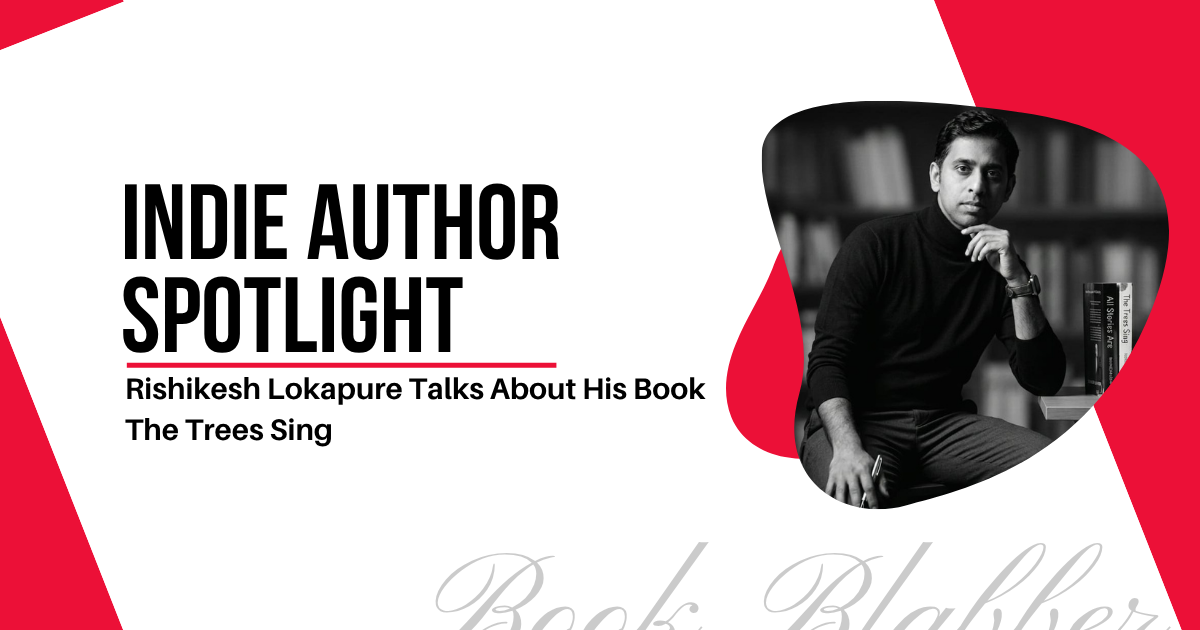
Ever wondered what goes on in the mind of an author? How do they turn the beauty of everyday moments into a memorable story? For author Rishikesh Lokapure, the secret lies in observing the details that often go unnoticed. Thrilled to have a chit-chat with him about his debut story collection, The Trees Sing (and also the next collection, All Stories Are).
Rishikesh sat down for a chat about his writing journey, the challenges of indie publishing, and some fun behind-the-scenes stories from the book's creation. If you’re an aspiring author or just love knowing what happens beyond the pages, this one’s for you!
Let’s dive in!
1. Tell us a little about yourself.
The world knows me as a Minister of Unnecessary Information. Since I have been lucky to work on a long list of creative projects around the world, I have built my experience and knowledge repository over the years.
I wear a few different hats – operating at the exact intersection of structural logic and human nuance. My background is actually rooted in theatre and finance (I have studied CA in India and CMA in the UK). Today, I transition between the quiet space of authorship and a vocal corporate life, serving as a Director at Ruminative Limited in London, UK, where I handle strategic consulting, advertising and biodiversity conservation.
This duality heavily inspired my debut literary fiction short story collection, The Trees Sing. It's a soul-soothing, feel-good book for adults who miss the simplicity of storybooks and want to slow down. Following that, I published All Stories Are, the second collection in this series, continuing to explore ordinary lives and quiet, unexamined moments.
2. OK, pitch your book in one or two sentences.
The Trees Sing is a short story collection to help you pause, reflect and connect with your true forgotten self that loves to think, express and believe.
3. And what kind of readers would love this book?
Surprisingly, I have had readers as young as 7 and as old as 99 read it and smile back. Since the stories are open to interpretation, any reader who loves simplicity and enjoys self-paced reading would pick it.
I have received reviews from those who are constantly travelling – the book has become their constant companion. I have also heard from those who have now stepped back – the book helps them to travel through their imagination.
4. Awesome… now, let’s get a little personal. What’s the story behind these stories?
I picked up a habit of observing people on trains, buses, flights, in meeting rooms, and while walking in the parks. I would then note a peculiar characteristic that caught my eye – the way someone walked, the way someone did their hair, maybe their dressing style. My diary was soon filled with these characters. I would then pick a protagonist and weave a world around it. That became my book.
5. Love that… Mauve was my favourite. Who inspired this character?
Well, a part of me has always lived outside conventional rhythms. Garden benches align more with me than boardroom chairs. When I was travelling through Wales, I saw a lady seated under a tree. She was reading a book. Coincidentally (or by design), a few birds were seated next to her at a distance. The wind was swaying the trees. I kept looking at the setting.
Since she was reading the story a bit loudly, I felt she was reading the story to the birds, and the trees were singing it back. I wrote the character sketch of Maeve – the flower lady, the same day, in the same park.
6. Wow, thanks for sharing. And which scene or character has stuck with you as your favourite?
It's very difficult to pick one because each character speaks the author's mind in parts. The tailor in the first story represents those who have a dream but are stuck in a different role. The gardener in second brings sincerity to the story. In the 3rd, the old couple represents the grapevines heard in society. The boss in the 4th represents the bias most employees carry towards their superiors. The twins tell us the beauty of individuality, where no one is an antagonist. The guitarist breaks the stereotype in his own way. The flower lady expands the definition of humanity and highlights why being kind is important. The poet is a metaphor of accepting beauty in imperfection. The billionaire in the end completes the arch of someone who has everything but is craving for ‘nothing,’
7. Fair. Now, writing isn’t all inspiration. What part of this book gave you the hardest time?
The hardest part here was writing a story without a definitive end. I wanted the readers to decide where the story heads from here. Also, choosing situations where a lot is said without saying it aloud. That was challenging, and I loved it!
8. I love such unending endings. Do you have a book planned with your characters again?
I have a book planned, but not with the same characters. There are more than 8 billion of us sharing the same planet. Each one is unique and brings a new flavour. If you read my second book, All Stories Are, every character is very different from those in The Trees Sing.
Meeting these new characters is what keeps me going as an author.
9. What about research? What’s one weird or unexpected thing you Googled while writing this book?
The title – The Trees Sing – was humming in my head from day one of the journey. When I finalized the draft, I began searching for “Do the trees really sing?” Have a look, the results are interesting.
10. Oh, I sure will. How has this indie publishing journey been for you?
Indie publishing isn't just writing! Most authors focus only on the writing aspect, but as an indie publisher, writing, designing the book, listing it, and marketing it are equally important.
The ride has surely been bumpy, but I am getting better at handling my vehicle. In the first month, I sold only 3 hard copies; last month, I crossed 145.
The most memorable moment was when someone in the US ordered a copy online and later called me to give detailed feedback, and ended up ordering 20 more copies as a Christmas gift for her family.
The journey has moved forward with the maiden book – The Trees Sing – now ready to be published by a traditional publisher in India.
11. Wow, what’s one piece of advice you have for aspiring indie authors out there?
One Day or Day One – you decide; and once you do, aim for Day Won.
12. Ohkayzz, and where can readers find you and your book?
I am best found on LinkedIn – https://www.linkedin.com/in/rishikeshlokapure/
As for my books, readers from India can check Amazon India:
Readers from the UK can buy from:
If the books sound like your kind of read, be sure to check them out! Support indie authors by grabbing a copy and leaving a review!
PS… What’s your go-to writing snack or ritual?
My little diary of large-hearted characters. The actual act of writing is the very last step in my process. My ritual begins with building characters, and a completely random setting where those two characters would cross paths. I then sit quietly and look at the vulnerabilities that I wish to write about. I usually don’t read anyone else’s work to keep my work feeling unique. Once the characters, situation, and the message are in place, my role as an author is to connect the dots to pen a relatable story. It's an oddly structured routine that keeps the creative gears spinning perfectly.
And that’s a wrap.
Want to see more indie author stories? Stay tuned for more interviews…



Comments