
From Idea to Reality: How George Pillari Brought No Adult Left Behind to Life
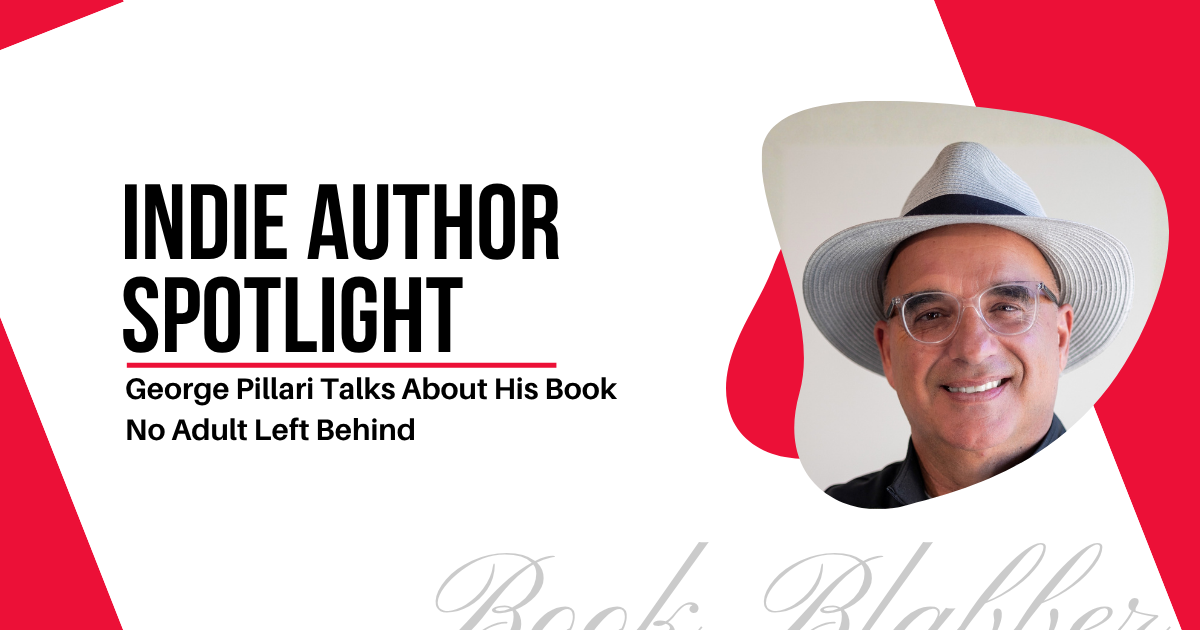
Every book has a story behind the story. Today, I’m sitting down with George Pillari, the mind behind No Adult Left Behind. We’re talking about the inspiration, the writing process, and the journey of bringing this book to life.
George is a seasoned expert in corporate crisis management. Now, he has shifted his focus to the rapidly evolving world of artificial intelligence. He explores how professionals can leverage AI to make smarter, faster decisions.
From his challenges to his favourite moments – this interview is packed with insights for readers and aspiring writers alike!
Let’s dive in!
1. Tell us a little about yourself.
I specialize in corporate crisis management. When a company falls behind on its loan payments, I get involved as the interim CEO. In this work, I see a lot of mistakes in judgement made by people in authority. My first book, The Seven Deadly Stupidities, summarized these mistakes. I continue to work as a crisis manager and the patterns of bad decision-making continue to repeat.
In my latest book, No Adult Left Behind, I shift focus from corporate boardrooms to everyday professionals, showing how artificial intelligence can become a tool for smarter, faster decisions. It’s my way of saying that the future isn’t passing you by; you can thrive alongside the machines. I believe AI is for anyone willing to keep learning and adapting.
2. Pitch your book in one or two sentences.
Without learning AI, you will “age” faster than your peers and become less and less relevant. Adults, especially those who have had a level of success without AI, need to keep learning or risk being left behind and unable to understand what people are talking about.
3. What kind of readers would love this book?
Professionals 30 years old and up are the target readers of No Adult Left Behind. This group is getting hit with the AI wave just as they are in the prime years of their careers. So, they can't afford to ignore AI and how it’s changing the world.
4. Now, let’s get a little personal. What’s the story behind this book?
Two things happened in the same week. First, a friend sent me a dialogue he had with AI and he used words like “please” and “thank you.” The second was a friend who had no clue how to use AI and I helped him fix his stereo by taking a picture and feeding it into AI. A light bulb went off for me (really) as I noticed how wide the gap was in the understanding of AI in my immediate social circle. That was the catalyst for the book.
5. Ohkay, any specific moment or a lesson from the book that’s close to your heart?
As a Tesla owner, I experience much of this firsthand. Autonomous vehicles (AVs) have been around for a long time, yet they haven't made it to the mainstream. I look forward to that day. The chapter on AVs in my book brings to light the two edges of the AI sword. First, the reaction time of AI is measured in milliseconds. So, when it detects a dog running in front of the car, it does not need to “think.” It’s already programmed to stop and can do all of this faster than a human brain that has to recognize the danger, process it, and then tell your body to hit the brakes. Second, AI is imperfect and is only as good as the data it was trained on. So, when it encounters something not stored in its memory, like a white truck passing through blinding sunlight, it doesn't know what to do.
6. What part of this book gave you the hardest time?
The hardest part was writing about resumes and hiring, since this is such a hot button for so many people. I didn't want to mess it up because, at any given time, aren’t we all looking for a better job? I felt that these sections of the book were directly and immediately useful to almost all of my readers.
7. And what’s one weird or unexpected thing you Googled while writing this book?
I was looking into the use of AI in the aviation industry. Until then, I didn’t realize how much AI is embedded in aviation. Control towers and airplanes rely on AI way more than people realize. Did you know the pilots only fly the plane for an average of three minutes per flight? Autopilot and other AI technologies do the rest.
8. Wow, any other industry that you found with surprisingly high usage of AI tech?
In the military. But AI in the military is quite an ethical debate. If one country hands over missile-launch decisions to AI and takes the human out of the decision-making loop, that country will have a definite advantage in speed of reaction to a threat. The AI perceives the threat, say incoming enemy aircraft, and autonomously takes action by launching the missiles to take down the aircraft. But what if the AI was wrong and the aircraft was a passenger plane and 300 civilian lives were lost? Who is held accountable in this situation?
9. Yeah, it’s scary. Did you come across something while researching or writing that completely changed the way you think about the topic?
The whole issue of training bias will be the next wave of AI controversy. For example, if the AI reading the x-ray of your broken ankle did not train on many broken ankles from people your age and demographic, the AI defaults to what it knows and does not say, “Hmm, I don’t have the experience to understand what I am looking at.” This will be a growing problem as AI is used more broadly in society.
10. True… If a reader could take away just one idea or insight from this book, what would you want it to be?
Figure out how to use AI tools in some way every day because in the next few years, everybody else will. If you’re an AI resister, you'll feel foolish in a few years. Hey, you probably use spell check on your documents, so think of AI as a natural extension of the tools you're already using. No need to get philosophical about it. Be practical.
11. Ohkayzz, and where can readers find you and your book?
No Adult Left Behind is available on Amazon. For my updates, you can follow my weekly newsletter.
If the book sounds like your kind of read, be sure to check it out! Support indie authors by grabbing a copy and leaving a review!
PS… What’s your go-to writing snack or ritual?
That’s easy. Utz potato chips.
And that’s a wrap.
Want to see more indie author stories? Stay tuned for more interviews…


Comments