
Unveiling the Book: In Through the Window. Dr. Lintao Lu Shares His Story
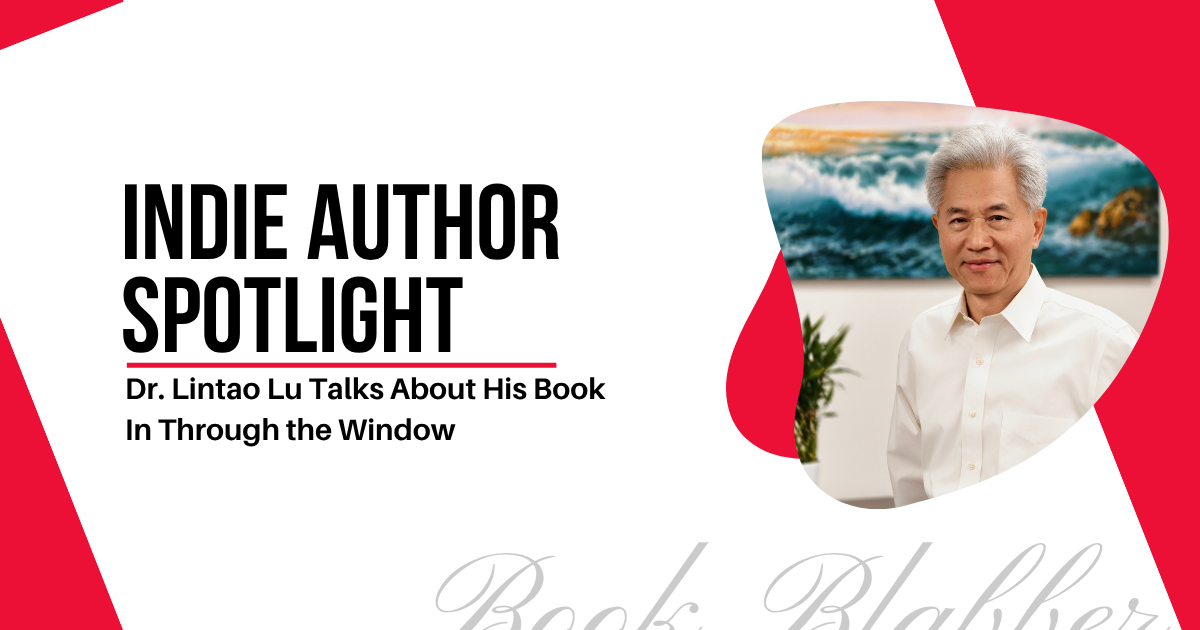
Writing a book is one thing. Bringing it to life and sharing it with the world? That’s a whole different adventure! Dr. Lintao Lu, the author of In Through the Window, takes us behind the scenes of his life and this book. His journey from a rural region in China to leading a global enterprise is a story of resilience, determination and self-belief.
In this interview, we explore the experiences that shaped Dr. Lu's outlook and the lessons he's learned along the way. This is about his perspective on embracing change and creating a path that’s uniquely your own.
Let’s dive in!
1. Tell us a little about yourself.
I’m Dr. Lintao Lu; most of my American colleagues simply call me LT. I’m an engineer, inventor, entrepreneur, CEO, and now the author of In Through the Window: On Forging Your Own Path to Success, published by Forbes Books in April 2026.
My life has taken me across four countries. I was born and educated in China, earned my Ph.D. in France, worked in Singapore, and eventually built my career in the United States. Along the way, I became an inventor, a business leader, and an entrepreneur.
But titles are only part of the story. More importantly, I have spent my life studying transformation – how ordinary people can rise beyond the circumstances they were born into. If there is one idea that defines me, it is this: our beginnings shape us, but they do not define us.
2. Wow, you had quite an adventure. Was there a moment in your own life when you first realised your future didn't have to be limited by where you started?
Yes, the defining moment was when I was awarded the scholarship for overseas doctoral study in France. This was the first cohort of overseas scholarship with the students selected from the first college class after China’s Cultural Revolution (CR). Also, this cohort was chosen from the very first national exam after the CR for graduate study in and outside of China. The admission rate was extremely low, one in a thousand.
I was very excited and overwhelmed with the award. “Why me?” I wondered. I thought about my brothers and sisters; my elder brother just finished primary school because he had to work to support the family, and my sister didn't attend any school since she had to take care of me. Most young people of my generation didn’t get the chance to finish high school, let alone pursue a college education or an overseas scholarship.
I felt a high honour and a tremendous responsibility. I realised that it must mean something, that perhaps I had been empowered by forces I didn't understand to do something exceptional and meaningful. I felt that I must do my best to prove that I deserved such a lucky and precious gift.
That’s when I first realised your future didn’t have to be limited by where you started, and it represented a huge step in my personal journey and a spiritual awakening.
3. That’s awesome. Pitch your book in one or two sentences.
When one door closes, don't complain. Don't wait. Go in through the window. In Through the Window is more than a memoir. It’s a philosophy of hope and transformation, a reminder that while life may close certain doors, it almost always leaves another path open for those willing to keep searching.
4. Lovely, what kind of readers would love In Through the Window?
This book is written for underdogs, for anyone trying to build a life against the odds.
It is for immigrants navigating unfamiliar cultures, first-generation professionals, entrepreneurs, and anyone who has ever felt like an outsider whose potential wasn't immediately recognised. I've lived those experiences myself.
It is also for emerging leaders. I believe leadership is not defined by titles or positions but by character, resilience, and continuous self-development. True leadership grows quietly, often through adversity rather than success.
But beyond those groups, it is really for anyone who believes human beings are capable of continual transformation. Leadership is not merely about leading others; it begins with leading ourselves. We become better leaders only by first becoming better human beings.
5. Now, let’s get a little personal. What’s the story behind this book?
The seed of this book was planted in childhood. As a boy growing up in rural China, my hero was the Monkey King – fearless, resourceful, and always able to find another way. That spirit stayed with me as I journeyed from China to France and eventually to the United States.
Years later, when I became the first student from my village to attend college, and later received a prestigious scholarship to pursue graduate studies overseas, I felt not only honored but deeply responsible. I often asked myself, "Why me? Why not my brothers and sisters, whose talents were no less than mine?"
Before leaving China for France more than forty years ago, I wrote these words:
My whole life must be a continuous striving for improvement. Should I fail, the footprints I leave behind will serve as guideposts for those who follow. Should I succeed, my achievements shall inspire the humblest among us to rise.
In Through the Window is, in many ways, the fulfillment of that promise. It’s not simply a story about success, but about resilience, character, and the belief that when one path is blocked, another can always be found.
Looking back, I realise I wasn't simply writing my autobiography. I was trying to answer a question that had followed me my entire life: How does an ordinary person create an extraordinary life? The answer, I discovered, has very little to do with luck or talent. It has everything to do with resilience, perspective, character, and the willingness to keep moving forward when the obvious path disappears.
6. Did you face challenges as you ventured beyond your hometown for opportunities, and eventually beyond China?
Yes. My journey has been long, imperfect, and filled with challenges, detours, setbacks, and failures. As a child, I grew up in extreme poverty during a time of political upheaval in China. In college, I experienced prejudice because of my rural background. In France, I struggled with a new language, a new culture, and a demanding academic environment. In the United States, I encountered the invisible barriers that many immigrants face.
Looking back, every stage of my life presented a different obstacle. But each obstacle also became a lesson. Rather than allowing adversity to define me, I learned to let it shape me. Every chapter of In Through the Window tells one of those stories – not just the challenges I faced, but how I transformed them into fuel for personal growth, professional success, and a deeper understanding of what it means to be human.
I’ve come to believe that our greatest obstacles often become our greatest teachers. My story isn’t about avoiding hardship; it’s about learning how to grow because of it.
7. Ohkay… Any specific moment or a lesson that’s close to your heart?
The chapter closest to my heart is the one about fear. In my mid-thirties, while working as an engineer for Rheem in a remote location far from my family, years of pressure, disappointment, and loneliness caught up with me. I began suffering from anxiety and panic attacks. Beneath them lay deeper fears—the fear of rejection, the fear of loneliness, and ultimately, the fear of death.
Only through that painful period of reflection did I come to accept something profoundly liberating: we all die. Whether pauper or president, regardless of our beliefs, we are united by our mortality. And, we all are connected to something far bigger than our physical world.
Ironically, accepting death taught me how to truly live. Once I stopped fearing the end, I became much freer to pursue the life I genuinely wanted.
That experience changed me forever. I realised courage is not the absence of fear. Courage is discovering something more important than fear. Once I stopped fearing failure – and even death – I finally became free to live the life I truly wanted.
8. You say accepting death taught you how to live. We’d love to know more about your life.
I love to sing. As one poet beautifully wrote, “In the universe, we are but singing and dancing dust.” Although I have to admit, I'm a much better singer than dancer.
I also love books – almost every kind. Science and technology, history, philosophy, psychology, business, leadership… each offers a different window into understanding the world and ourselves.
And I love to travel, especially to places I've never been before. Every journey reminds me how vast the world is and how much there is still to learn.
I was a curious child, and I remain a curious man today. Accepting that our time is limited has only deepened that curiosity. It reminds me not to stop learning, not to stop exploring, and not to stop becoming a better version of myself.
9. That’s pretty varied. Coming back to your book, what part of writing it gave you the hardest time?
Surprisingly, the hardest part wasn't writing. It was deciding what to leave out.
After decades in global business, I had accumulated countless stories about leadership, innovation, mergers, politics, and corporate life. But I didn't want to write a business memoir.
I wanted readers to see the human being behind the executive. Every chapter had to answer one question: "What truth about life does this story reveal?" Once I adopted that principle, writing became much clearer.
10. And is there any weird or unexpected thing you Googled while writing this book?
A few years ago, when I was on vacation on the island of Hawaii, I was told that Mauna Kea is the tallest mountain in the world, higher than Mount Everest. Looking into that, I found its height to be around 4,207 meters from sea level. Yet, the true height of Mauna Kea (or dry height) measured from the ocean floor is 9,330 meters, with over 5,000 meters hidden beneath the sea level. The finding is an inspirational one for me. In it, I see parallels to the climb required in my life journey, one so steep and precarious that it is a reminder to me of how far I have come, since I started my climb from the very bottom of the mountain at the ocean floor, not from the surface of sea level.
That discovery became one of my favourite metaphors. Most people compare themselves from sea level upward. I often remind myself that my climb began at the ocean floor. We all have different starting points. Comparing summits without understanding beginnings is one of life's greatest illusions.
11. That’s fascinating. What else did you come across while researching or writing that completely changed the way you think about the topic?
One unexpected discovery was that success itself wasn't the most interesting part of my story. I originally thought readers would be fascinated by promotions, patents, and business achievements. Instead, I found myself writing far more about failures, disappointments, loneliness, and uncertainty. Those moments shaped me far more than success ever did.
Success changes your circumstances. Struggle changes your character.
12. True that. If a reader could take away just one idea or insight from this book, what would you want it to be?
If one door closes, don't complain. Don't wait. Find another way. We can't always control what happens to us, but we can always choose how we respond. Perspective creates possibility. Character sustains perseverance. Hope keeps us moving. And sometimes, what first appears to be the greatest disappointment of our lives becomes the very event that leads us toward our true calling.
13. Quite philosophical! Looking back at the young man from China, do you think he would recognise you now?
I don’t think he would recognise me at first. I’ve traveled a long way from where I began, not just geographically, but as a person. Life has transformed me in ways that the young man from rural China could never have imagined.
But after spending some time with me, I think he would understand, and I hope he would be proud. Beneath everything that has changed, he would still recognise the things that never did: the curiosity that kept asking questions, the dignity that refused to surrender to circumstance, the resilience to keep going when doors closed, and the belief that there is always another way forward. Those qualities carried me from that small village to where I am today, and in many ways, I’m still that same young man.
The path was completely different from anything he imagined, but I think he’d smile when he realised that I never stopped looking for the window whenever the door was closed.
14. Ohkayzz, and where can readers find you and your book?
You can visit my personal website, lintaolu.com. I’m also active on LinkedIn.
My book, In Through the Window, is available for purchase through Amazon.
If the book sounds like your kind of read, be sure to check it out! Support indie authors by grabbing a copy and leaving a review!
PS… What’s your go-to writing snack or ritual?
Because I serve as CEO of NAVAC full-time, I wrote this book in the margins of life. Most chapters were written before sunrise or long after midnight, when the world became quiet. During the day, I solved engineering and business problems. At night, I explored questions that have fascinated humanity for thousands of years: What makes a meaningful life?, How do we become who we are meant to be?, and when life closes a door, how do we find the courage to look for a window?
And that’s a wrap.
Want to see more indie author stories? Stay tuned for more interviews…



Comments