
Unveiling The Navigator’s Pivot: Danura Miriyagalla Shares His Writing Story
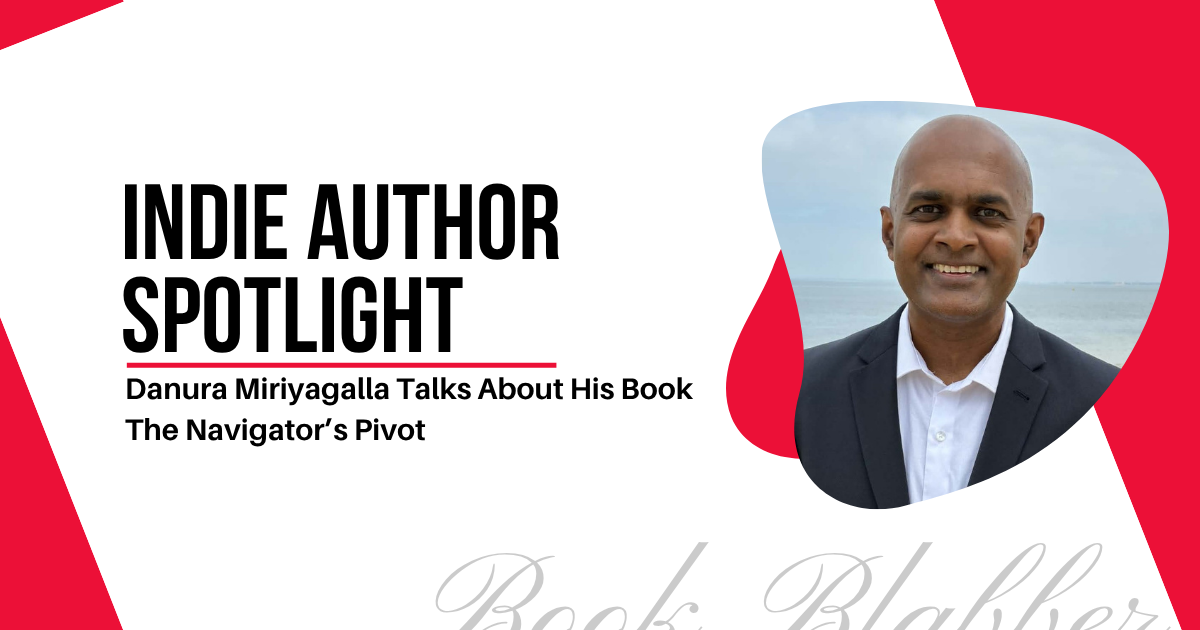
In an era that often demands our lives to be mapped out with precision, the reality is rarely so linear. Whether it’s a work-related pivot, a shift in identity, or the realisation that our current life trajectory no longer aligns with our purpose or values, we all reach a moment where the old map stops making sense.
In his book, The Navigator’s Pivot, author Danura Miriyagalla offers a transformative perspective on how we can embrace uncertainty. During our conversation, we talked about the inspiration, the writing process, and the journey of bringing this book to life.
From his biggest challenges to his proudest moments – this interview is packed with insights for readers and aspiring writers alike!
Let’s dive in.
1. Tell us a little about yourself.
I am a writer and international development/management professional with a longstanding interest in leadership, policy, research, creativity, business, institutional change and the way people respond to uncertainty. Much of my professional life has involved working across different countries, cultures, and complex environments. Those experiences have shown me that progress is rarely a straight line – and that the ability to navigate can be more valuable than the ability to follow a fixed plan. I also coach professionals to transition through uncertainty.
My book, The Navigator’s Pivot, brings together many of those observations, along with reflections from my own transitions and conversations with people who have had to reconsider their direction in work and life.
When I am not writing, I enjoy exploring ideas, mentoring others, and having conversations that begin with one topic and somehow end up somewhere completely unexpected. Metaphors tend to appear in my thinking and conversations, whether I intend or not!
2. Pitch your book in one or two sentences.
The Navigator’s Pivot is a reflective guide for anyone who has reached a point where the old map no longer fits the journey ahead. Rather than offering a rigid formula, it helps you understand uncertainty, rediscover your direction, and move into your next chapter with greater clarity and confidence.
3. What kind of readers would love this book?
This book is for people who are navigating a transition (or beginning to sense that one may be approaching). They may have found a new opportunity, lost a job, stepped away from a familiar role, reached a professional crossroads, experienced burnout, relocated, retired or simply realised that the path they are following no longer feels right. It’s equally relevant to people facing a forced change and those who have achieved conventional success but are quietly asking, “Is this still the right direction for me?”
Readers who enjoy thoughtful, metaphor-rich books will especially connect with it. It isn't a quick-fix manual or a conventional career guide (there are enough of those out there). It’s for reflective readers who want practical frameworks but also appreciate space to examine identity, purpose, values and possibility.
4. Awesome! Now, let’s get a little personal. What’s the story behind this book?
The idea grew gradually through years of reflecting on how I and others around me respond to major transitions. It was built on a diverse, fulfilling and insightful career full of pivots through uncertainty and one where I stayed true to a strong sense of purpose.
I noticed that when someone experienced a career disruption or significant life change, the immediate conversation was usually about the visible next step: finding another job, changing roles, moving somewhere new, or creating a new plan. But beneath that visible pivot, something much deeper was often happening. I saw unhappy people doing roles they don’t enjoy, but were scared to move out. I saw people not certain how to take decisions and look for opportunities that brought meaning.
People were questioning who they were, what they valued, where they belonged, and what success now meant to them. I came to distinguish between the pivot, which is the visible change in direction, and the inflection, which is the deeper internal shift in identity, meaning and perspective. That distinction became one of the foundations of the book. I wanted to create something that did not simply tell people how to move forward but helped them understand what they were moving through.
5. That’s deep. Any specific moment or a lesson from the book that’s close to your heart?
One lesson that’s especially close to me is the idea that you aren't necessarily lost simply because your old map no longer works. During a major transition, people often interpret uncertainty as evidence that something has gone wrong. They may feel that they should already have an answer or a clearly defined destination. But sometimes the problem isn't the person – it’s the map. The assumptions, ambitions or definitions of success that once guided them may no longer fit who they are becoming.
That realisation can be deeply freeing. It allows people to stop judging themselves for not having immediate certainty and begin paying attention to the new landscape emerging around them. The book encourages readers to see uncertainty not simply as a problem to eliminate, but as an environment they can learn to navigate.
6. Beautiful. What part of this book gave you the hardest time?
The greatest challenge was finding the right balance between providing structure and preserving openness. Transitions are deeply personal. I didn't want to write a prescriptive book that suggested there was one correct sequence, one ideal destination, or a ten-step formula that would work for everyone. At the same time, I wanted readers to have practical concepts and frameworks they could use when everything felt unclear.
The solution was to approach the book as a reflective navigation guide rather than a playbook. The frameworks – including the three types of pivot, the five stages of transition, the navigator archetypes, the Transition Map, the Transition Compass, the Boats Framework and the Four Periscopes – help readers examine their situation from different perspectives. But they do not dictate the answer.
It was difficult to find that balance, but I pushed through it. I repeatedly returned to one question: “Will this help the reader see their situation more clearly without taking ownership of the journey away from them?”
7. You mentioned the “five stages of transition” here. Can you tell us what these stages are?
The book presents transition as a voyage through five broad stages: Disorientation, Orientation, Pre-navigation, Navigation and Integration.
- Disorientation begins when the old map stops making sense. Something has changed, and the assumptions, routines or goals that once provided direction no longer feel reliable.
- Orientation is the stage of pausing and taking stock. Instead of rushing immediately towards a solution, we begin to understand where we are, what has changed, and what still matters.
- Pre-navigation is where possibilities start to emerge.
- Navigation is the movement itself. This is where reflection begins to translate into decisions, experiments and action.
- Finally, Integration is the stage in which the transition becomes part of who we are.
These stages aren't intended to be a rigid or linear sequence. People may move backwards and forwards between them, revisit an earlier stage, or experience several at once. Their purpose is not to prescribe how transition should happen, but to help readers recognise where they may be in the journey – and what that particular stage may be asking of them.
8. That’s beautiful! While writing this book, did you come across anything that completely changed the way you think about the topic?
One of the most important shifts in my own thinking was recognising that uncertainty isn't merely a temporary gap between two periods of stability.
We often assume that uncertainty will end once we make the right decision, secure the next role, or develop a new plan. But the world in which we live and work is becoming more interconnected, disrupted and unpredictable. Uncertainty is increasingly part of the environment itself.
So, now, instead of asking, “How do we eliminate uncertainty?” I began asking, “How do we become better navigators within it?” This is central to what I call the Navigation Mindset for Transitions: the ability to remain aware, interpret changing conditions, examine situations from multiple perspectives, and move through transitions with purpose even when the entire route is not yet visible.
9. And what’s one weird or unexpected thing you Googled while writing this book?
I found myself researching how albatrosses and sea turtles navigate. At first glance, that may seem like a rather strange research trail for a book about work-life transitions. But it eventually contributed to the Albatross–Turtle Framework in the book.
The albatross represents exploration, rise, range and the ability to travel across enormous distances while responding to changing winds. The turtle represents grounding, memory, endurance and the instinct to return to what is fundamental. During transitions, we often need both capacities: the courage to explore new possibilities and the wisdom to remain connected to our deeper values.
It was one of those moments when a seemingly unusual search opened the door to a very useful metaphor.
10. Lovely metaphor! If a reader could take away just one idea or insight from this book, what would you want it to be?
I would want readers to understand that a transition isn't only about replacing what has been lost or choosing what comes next. It’s also an opportunity to reconsider the assumptions that shaped the previous journey.
You don't need to have the entire route mapped before you begin moving. But it’s important to pause long enough to understand where you are, what has changed, what still matters, and what kind of navigator the next stage of your life requires you to become.
A pivot may change your direction. An inflection can change the way you understand the journey itself.
11. Ohkayzz, and where can readers find you and your book?
You can know more about me and my work at apexah.com, and you can connect with me directly on LinkedIn.
The Navigator’s Pivot book is available through Amazon.
If the book sounds like your kind of read, be sure to check it out! Support indie authors by grabbing a copy and leaving a review!
PS… What’s your go-to writing snack or ritual?
My writing ritual is fairly simple: a quiet space, early morning, a cup of tea, and enough uninterrupted time to follow an idea wherever it wants to go. I often begin with a rough phrase that came to my mind rather than a complete argument. I often let structure come after the idea has had a free flow. Once the idea has found its direction, the structure gradually follows.
Also, a long-haul flight is never ‘wasted’ – I would have a couple of ideas waiting to jump in! Strangely, times when I have also gone to another place and am jetlagged are also perfect times for ideas. Never waste a Sunday morning, long-haul day flight, or jet lag in a new location!
And that’s a wrap.
Want to see more indie author stories? Stay tuned for more interviews…

Comments