
Writing, Publishing, and Lessons Learned – A Chat with Dr. Mahendra Ingale
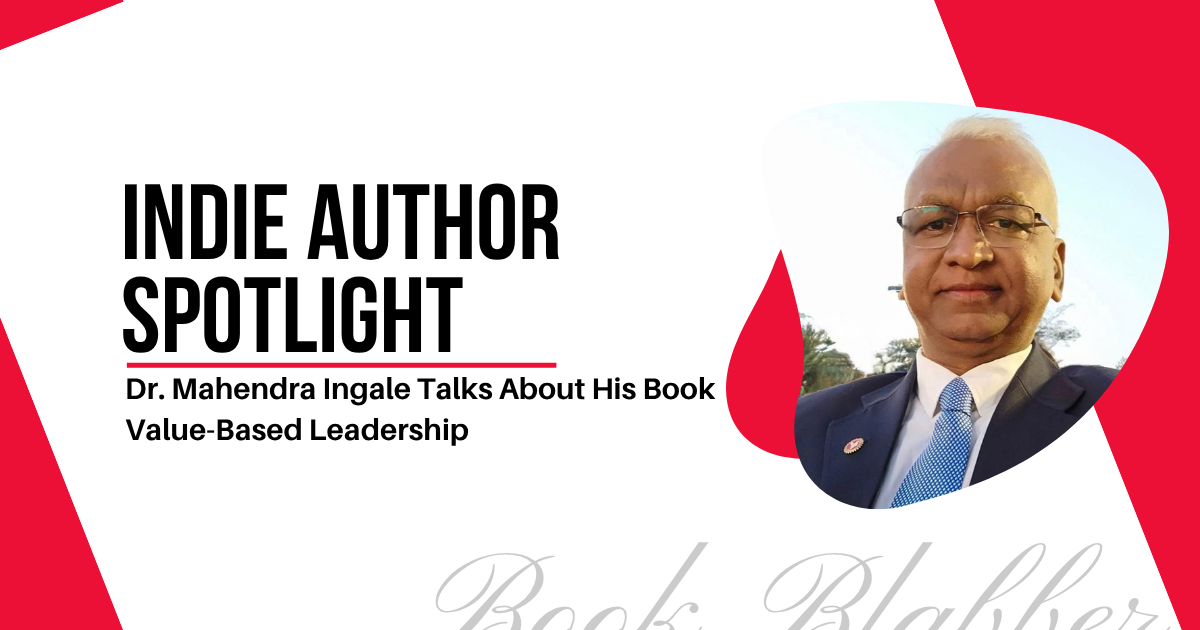
Today, I’m sitting down with Dr. Mahendra Ingale, the mind behind the book Value-Based Leadership. His deep love for his work prompted him to embrace self-publishing, taking the less-travelled road, for the sake of autonomy.
We talk about the inspiration for the book and the journey of bringing it to life. From his biggest challenges to his proudest moments, this interview is packed with insights for readers and aspiring writers alike!
Let’s dive in!
1. Tell us a little about yourself.
I am an engineer by profession, but a storyteller at heart. Writing has always been my way of connecting with people and reflecting on life’s deeper meanings. My books—Abhiyantriki Spandane in Marathi and Engineering Heart Beats in English—were born from that impulse. When I’m not writing, I enjoy travelling, observing small details of life, and turning them into reflections.
My latest book is Value-Based Leadership, a philosophical work that offers a fresh perspective on leadership. Through reflective storytelling and lived experiences, it offers practical wisdom for leaders. I often see metaphors in everyday things—a sparrow, a butterfly, even a calm announcement from a pilot can become a lesson in leadership. And that’s how this book came to be.
2. Pitch your book in one or two sentences.
Value-Based Leadership is not a textbook, but a tapestry. It transforms everyday moments into lessons of calmness, clarity, and courage—written in a poetic and philosophical style that makes leadership an inspiring experience for every reader.
3. What kind of readers would love this book?
This book is for seekers—for those who wish to walk the path of values, draw meaning from life, and lead with courage in whatever field they belong to. Students, educators, entrepreneurs, statesmen, politicians, social workers, spiritual guides, or anyone engaged in shaping lives and communities will find reflections here that resonate.
4. Awesome, let’s get a little personal. What’s the story behind this book?
Carl Jung once said, “Every great person must write an autobiography.” That thought stayed with me. My earlier works were close to autobiography, but more like reflections of an engineer’s soul. Later, through blogs like “Empty Your Cup First,” I realised that to learn more, I must first pour out what I had already gathered. This book is my attempt to empty the cup—to share my insights on leadership so that I could make space for new learning. The cup is not fully emptied, perhaps it never will be, but in the act of writing, I found myself enriched.
5. And any specific moment or a lesson from the book that’s close to your heart?
One moment that remains close to my heart comes from my years as a government officer. While serving as an office bearer of the Polytechnic Teachers’ Association, we challenged a government resolution in court. In response, I was abruptly transferred to a remote posting. I refused to join, and for 105 days I lived at home, uncertain and frightened by the threat of disciplinary action. Yet those days became transformative. I immersed myself in prayer and in spiritual and philosophical books, preparing inwardly for whatever might come. Finally, the government cancelled the transfer.
Out of that struggle was born the chapter “The Three‑Fold Nature of Struggle” and, most importantly, the conceptual paper “Decision‑Making with Intuition Integrated with Prayer.” That experience taught me that adversity can be a crucible, shaping not just resilience but new ideas that continue to guide me.
6. What’s one weird or unexpected thing you Googled while writing this book?
After most of the chapters were written, I asked Google a curious question: Has anyone ever written a book like this before? The answer was fascinating—and perhaps best left for readers to discover for themselves. Sometimes the strangest research is not about the world outside, but about finding echoes of yourself in others’ work.
7. Hehehe okay… What part of this book gave you the hardest time?
Writers often speak of struggle—Hemingway even said, “Writing is bleeding on the paper.” For me, writing was not bleeding; it was breathing. I felt joy, fulfilment, and contentment throughout the process. Yes, there were moments of introspection that shook me briefly, but they passed quickly, leaving behind clarity. I have learned to see incidents objectively, and to treasure joyous moments while quietly forgetting the rest. Writing did not drain me—it replenished me.
8. This reminds me of Stoicism. Are you stoic? Do you believe in it?
I wouldn’t call myself a Stoic in the strict philosophical sense, but I deeply resonate with its spirit—accepting what lies beyond my control, standing firm in conscience, and finding strength in inner discipline.
9. Got it… Now, how has the indie publishing journey been for you?
Self-publishing has been a journey of autonomy and joy. I chose it deliberately, even though some renowned publishers were willing to publish my work. For me, independence mattered more than convention. I developed my own marketing approach—what I call organic digital marketing in a passive mode. In other words, I let the book itself travel and find its readers naturally. The ride has been enriching, full of surprises, and deeply satisfying.
10. Now, for all the aspiring indie authors out there. What’s one piece of advice you wish someone had given you?
Although some of my friends and colleagues contributed to this work, none gave me advice on writing, publishing, marketing or advertising, and I never asked for it. I am glad about that. It allowed me to walk freely, to innovate, and to create in my own way. Robert Frost’s less-travelled road became my path—I chose self-publishing, my own style of writing, and even my own way of marketing.
So my advice to aspiring authors is this: don’t wait for someone else’s wisdom. Be your own guide, and let your originality lead you. Sometimes the best advice is the one you never receive—because it leaves you free to discover your own.
11. Ohkayzz, and where can readers find you and your book?
Value-Based Leadership is available on several websites in both eBook and hard copy formats:
I also share reflections regularly on Medium, LinkedIn, Instagram, Facebook, and my website (drmahendraingale.com). You may connect with me through mvingale2405@gmail.com
If the book sounds like your kind of read, be sure to check it out! Support indie authors by grabbing a copy and leaving a review!
PS… What’s your go-to writing snack or ritual?
My ritual is simple: Joy.
I preserve joyous moments at the bottom of my heart and let them guide my writing. Sometimes it’s a quiet cup of tea, sometimes a walk, sometimes just silence. But always, joy is my companion—and the truest fuel for my words.
And that’s a wrap.
Want to see more indie author stories? Stay tuned…

Comments